
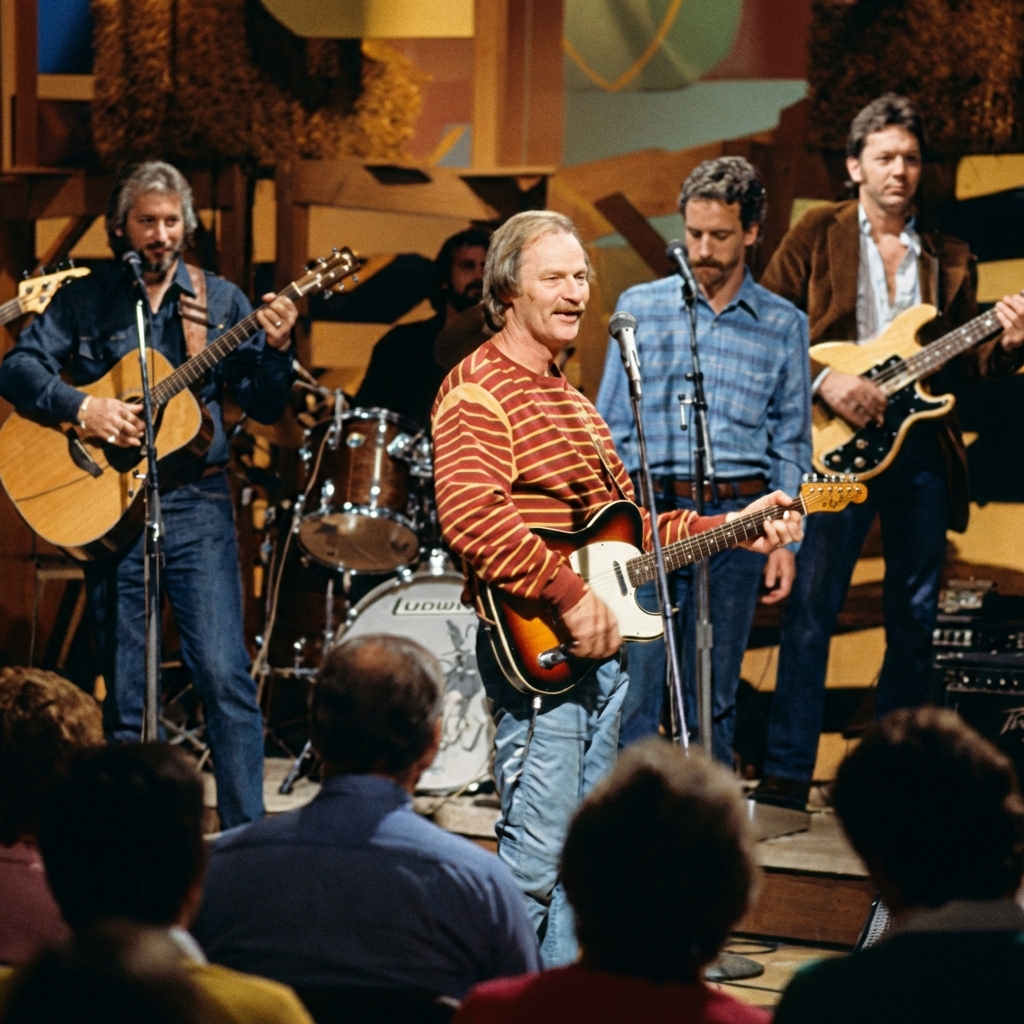
There is a certain kind of quiet heartbreak that doesn't happen onstage. It happens in the places right outside the spotlight — the hallway, the side door, the back row where the sound is still perfect but the attention is aimed elsewhere. That is where many people imagine Vern Gosdin standing at some point in his long career, listening as the Grand Ole Opry welcomed another familiar name "home." Not angry. Not demanding. Just watching the machine of tradition roll forward without him.
It's tempting to treat this like a scandal, to turn it into a simple headline: How could they miss him? But Vern Gosdin was never a simple story, and neither was the kind of country music Vern Gosdin made. Some voices are built for bright introductions and smiling curtain calls. Vern Gosdin sang like a man who had already lived through the part people try to hide. His songs didn't show off first — they confessed.
The Kind of Singer Who Didn't "Fit" the Celebration
The Grand Ole Opry has always been a symbol, not just a stage. It's family, legacy, and a certain kind of polished pride. It celebrates history while it makes it. And yet, sometimes the most important voices don't sit comfortably inside the frame.
Vern Gosdin wasn't built for neat stories. His voice carried weight — the kind that makes a room go still. When Vern Gosdin sang about regret, it didn't sound like a lesson. It sounded like a memory that refused to leave. When Vern Gosdin sang about love, it didn't sound like a promise. It sounded like something that survived the worst parts and stayed anyway.
That kind of honesty can be inconvenient. Radio often wants an easy feeling. Big stages often want a moment that lands clean. Vern Gosdin delivered moments that lingered, and sometimes lingered too long for a crowd that came to forget.
The Strange Logic of Recognition
People love to believe the music business is a merit system. If a voice is great enough, the doors open. If the songs are true enough, the trophies arrive. But the truth is messier. Recognition is part art, part timing, part politics, and part luck. Some artists become symbols early. Others become secrets that the world only admits later.
There were years when Vern Gosdin was admired deeply by people who mattered — singers, musicians, writers — but still didn't get the kind of institutional embrace that would have made the story feel "official." Fans noticed. Some whispered it like a question that didn't have a satisfying answer: Why does it feel like Vern Gosdin is always just outside the ceremony?
And if you listen closely to the way people talk about Vern Gosdin now, you can hear a different kind of respect — one that doesn't depend on a microphone announcement. It's the respect reserved for someone who did not chase approval, and therefore never sounded like he was performing for it.
"Some singers entertain you. Vern Gosdin tells you the truth."
What Vern Gosdin Gave Country Music Instead
The irony is that the absence of a title sometimes sharpens a legend. When people say the name Vern Gosdin today, they often say it softly, like they're not trying to impress anyone — they're trying to be accurate. There's a difference between fame and gravity. Vern Gosdin had gravity.
Vern Gosdin's voice wasn't flashy. It didn't lean on tricks. It just arrived, solid and human, like a friend telling the truth after midnight when the party is over and the room is finally honest again. Vern Gosdin sang the way people actually feel when nobody is watching: unsure, stubborn, tender, ashamed, hopeful, exhausted — sometimes all in one line.
And that may be the real reason the question still stings. The Grand Ole Opry is supposed to represent the heart of country music. So when a voice like Vern Gosdin never gets "the call," it makes fans wonder what country music is rewarding — and what it sometimes overlooks.
Did the Opry Overlook Vern Gosdin, or Did Vern Gosdin Never Need the Opry?
Here is the part people argue about in quiet corners and loud comment sections. Some say the Grand Ole Opry missed a chance to honor an essential voice while that voice was still here to feel it. Others say the Grand Ole Opry is one institution among many, and Vern Gosdin became a legend without needing a formal invitation.
Both can be true. The Grand Ole Opry is a symbol, and symbols matter. But symbols are also imperfect. They don't always catch the full truth in time.
What history seems to have done — slowly, stubbornly — is correct the silence in its own way. Vern Gosdin's name still travels through Nashville and beyond, carried by the people who know what it costs to sing honestly. And it's telling that the respect grows with time, not shrinks. That doesn't happen with a gimmick. That happens with a voice that was real.
Maybe the call never came. Maybe the introduction never happened the way fans wanted. But there's another kind of invitation that lasts longer than any stage announcement: the one listeners give, year after year, when they press play and let a song say what they couldn't.
In the end, the most haunting question isn't whether the Grand Ole Opry overlooked Vern Gosdin. It's whether the rest of the world took too long to understand what it was hearing.
"A legend isn't crowned by a room. A legend is remembered in the quiet."